Seafood Task Force Achieves Initial Impact Across India's Shrimp Supply Chain - Feb '26
The Seafood Task Force (STF) has successfully completed its first comprehensive cycle of baseline assessments across India's shrimp supply chain, marking a significant milestone in advancing social accountability and worker welfare throughout the industry. Notably, this initiative represents the first time that working conditions at fishing vessels supplying marine ingredients for shrimp feed have been made visible to the global seafood supply chain.
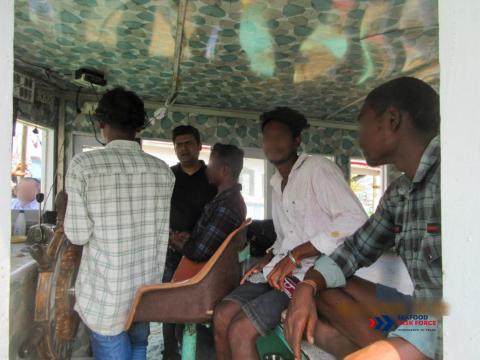
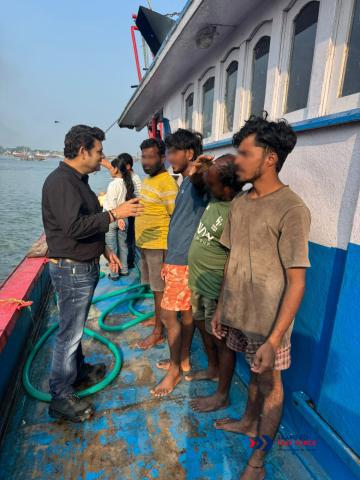
The assessments, completed in November 2025, covered processors, farms, feed mills and fishmeal plants. Along with fishing vessels across shrimp farming and production areas in Andhra Pradesh, along with fishing ports in Goa, Mangalore and Ratnagiri. By navigating the complex layers of India's fragmented shrimp supply chain, the STF has established a foundation for targeted improvements that will directly benefit the lives of fishing crew and workers throughout the sector.
The comprehensive assessment results are now informing Action Plan 2026, which STF members buying and supplying from India will implement across factories and farms. Key focus areas include improving wages and benefits for workers, providing employment contracts in the languages understood by workers as well as involving labor contractors in the improvement process. From January 2026, the STF will begin addressing key issues observed aboard fishing vessels, ensuring that the challenges faced by fishing crew are understood and systematically addressed.
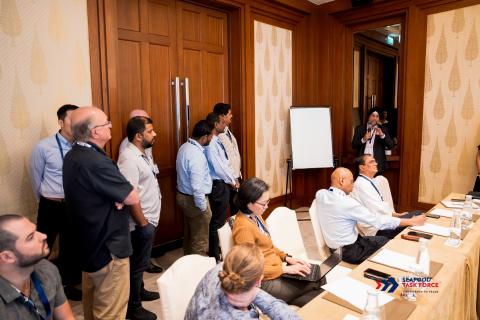
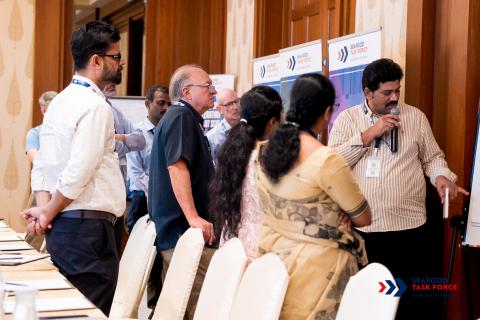
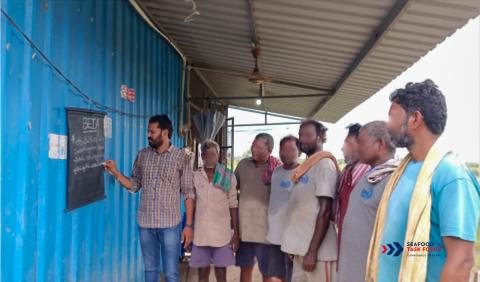
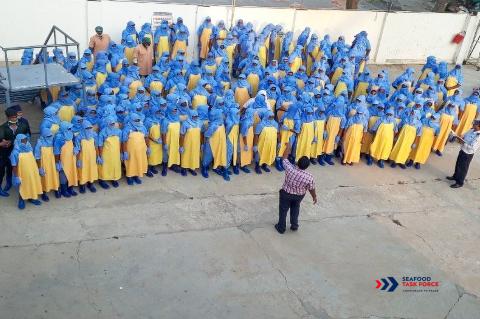
The impact of the STF's capacity-building 2025 initiatives is already being felt across India's shrimp industry. Following the Train-the-Trainer program delivered in July 2025, over 14,600 factory workers and 1,900 farm workers to date have received training on their right to freedom of movement at dormitories, with numbers continuing to expand as members' trainers reach more sites. Production sites and farms across members' supply chains have also acknowledged that child labor is not permitted and have learned how to prevent it from the recruitment phase onwards. Additionally, the STF's work has contributed to improved school infrastructure and resources for children in local communities.
STF Executive Director, Martin Thurley said:
"Completing this first cycle of baseline assessments represents an important moment for social accountability in India's shrimp industry. We have comprehensive visibility into working conditions at fishing vessels, which has historically been one of the most challenging areas to reach and assess. The insights we've gained are already informing our workplans, with thousands of workers now better informed of their rights and protections. Our members are committed to continuous improvement, and the STF Action Plan 2026 will build on this foundation to create positive impacts for workers throughout the supply chain."
The STF remains committed to working collaboratively with its members, government partners and industry stakeholders to strengthen social accountability, enhance traceability, and protect worker welfare across India's shrimp sector.
Ends
For media inquiries, please contact: stf@thephagroup.com
About the Seafood Task Force:
The Seafood Task Force (STF) was established in 2014 to restore global confidence to trade, following concerns about social and environmental abuse in global tuna and shrimp supply chains. It is made up of over 50 major retailers, brands, food service companies and their supply chain partners.
The STF drives supply chain oversight at scale, pioneering a pro-competitive approach that makes it easier for its members to meet international standards and growing due diligence requirements.
The STF is a US-based, not-for-profit trade association established for the seafood industry by the seafood industry. Its vision is a future where its members’ seafood supply chains are fully traceable, free from the risk of human rights violations and free from environmental degradation.
For more information: https://seafoodtaskforce.global/